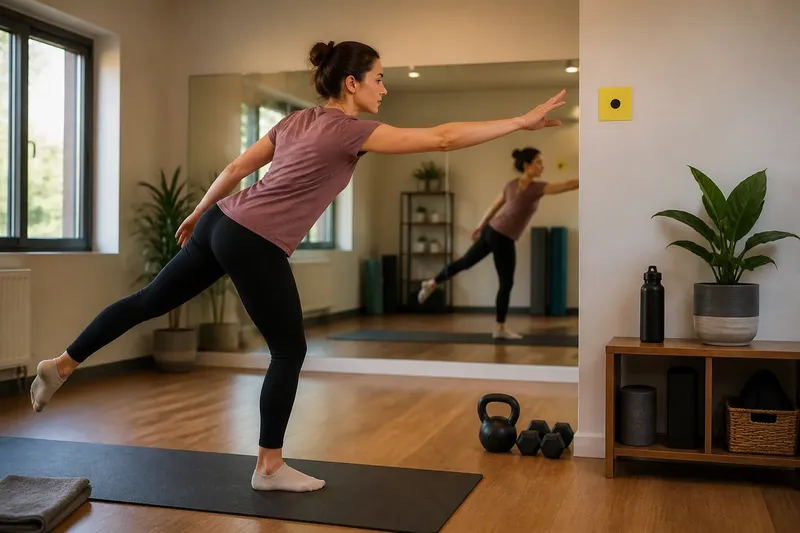
Before the Studio Class: How Group Exercise Became a Scheduled Habit
The history of group exercise traces how school gymnastics, community recreation, and studio formats made shared movement easier to plan and repeat.
Why did group exercise become something people could put on a weekly calendar? The history of group exercise is easier to follow through specific settings: school gymnastics, organized community recreation, and later studio classes each gave shared movement a recognizable time and place.
School gymnastics gave group movement a formal setting
In the nineteenth century, organized gymnastics became part of physical education in parts of Europe and North America. Schools and training institutions used group drills, apparatus, and instructor-led routines to teach movement in a structured setting. The class arrangement was visible: learners gathered together, watched a teacher or instructor, and practiced a shared sequence.
That setting was different from an informal gathering. A school timetable made physical instruction one activity among others, while a leader could demonstrate movements and correct how they were performed. It also helped make group practice repeatable, though access and the content of instruction varied across institutions and communities.
Community recreation brought organized activity beyond school
As towns and cities developed public recreation facilities and clubs, organized physical activity also appeared outside the school day. Community halls, settlement houses, and recreation programs offered places for people to meet for dance, gymnastics, games, and other guided activities. These were distinct local programs rather than one uniform movement, but they shared a practical feature: a regular gathering could be announced and attended.
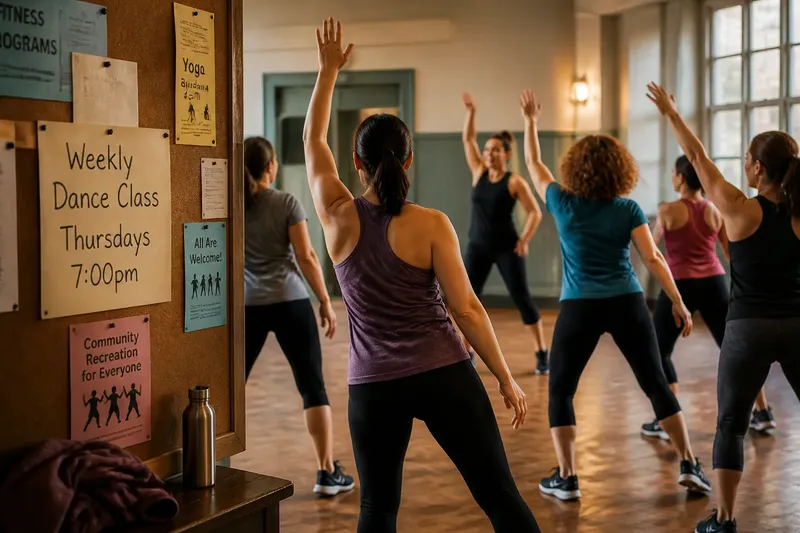
Dance provides a clear example of how a social activity could also have an organized format. A class or club could meet at a stated time, with a teacher demonstrating steps and participants practicing together. The group did not need identical skill; a shared rhythm and instruction gave newcomers a way to join.
Imagine a fictional neighborhood recreation hall that posts a weekly dance lesson on its noticeboard. The starting point is an open room and residents who do not know the same steps; the organizer sets a meeting time, demonstrates a simple sequence, and repeats it with the group. The expected observable result is that attendees can return to a familiar activity without having to arrange each gathering from scratch.
Commercial fitness studios made class formats recognizable
In the twentieth century, commercial exercise businesses helped establish the studio class as a distinct option. Dance-based exercise, aerobics, and other instructor-led formats gave participants a session organized around a particular style, music, or set of movements. The studio offered a scheduled place to attend, while a format name helped signal what kind of session was on offer.
These classes did not replace school or community programs. They added another route into organized exercise, one tied to a business, a facility timetable, and often a recurring instructor-led format. As gyms and studios broadened their offerings, participants could choose among sessions rather than simply join the one gathering available nearby.
Timetables turned shared movement into a routine
A regular timetable makes a class easier to fit around other commitments. A posted start time, a known location, and an instructor provide practical cues: when to leave, where to go, and what to expect on arrival. In that sense, scheduling did more than organize the room; it let a participant treat exercise as an appointment.
Formats also developed different social cues. A dance class asks people to watch rhythm and spacing; a cycling session centers attention on bikes and instructor prompts; a mat class gives each person a defined space within a shared room. These distinctions can help a newcomer choose, but class names do not always tell the whole story, so descriptions and facility guidance matter.
What do people ask about the history of group exercise?
Did group exercise begin in modern gyms?
No. Organized group movement existed in settings such as schools, clubs, and community recreation programs before the contemporary gym or studio class. Modern facilities developed alongside those older forms rather than replacing a single origin point.
How did a class become a scheduled habit?
Institutions and organizers set recurring times and places for instruction, and facilities later listed sessions on timetables. Participants could then return to a familiar format instead of arranging each activity independently.
Why did studios offer different class formats?
Distinct formats helped facilities organize instruction around different equipment, movement styles, and participant interests. A format name gives a useful first clue, but the class description is a better guide to the session’s actual pace and expectations.
Choose a class by checking its practical details
The history of group exercise explains why a timetable, instructor, and recognizable format still matter: they make it easier to know how to join. Before booking, check the details that affect whether a session is workable for you.
- Check the class description for movement style; if it matches what you want to try, book it, and if it relies on unfamiliar skills, ask the facility what beginners should expect.
- Check the listed level or entry guidance; if it welcomes newcomers, attend and tell the instructor you are new, and if the description assumes experience, ask about an introductory option.
- Check the location and travel route; if you can reach the venue without rushing, keep the session, and if the trip is impractical, look for the same format nearer home or work.
- Check the timetable against your other commitments; if the start time leaves room to arrive and change, reserve a place, and if it creates a squeeze, choose another listed session.
- Check whether the facility supplies mats or other equipment; if the needed items are provided, follow its arrival instructions, and if participants bring their own, confirm what is appropriate before purchasing anything.
- Check how to ask for a modification or pause; if the instructor or class description explains options, use the one that suits your comfort, and if the guidance is unclear, ask before the session begins.
Say you work near a community center and want to try a mat-based class. In this invented situation, the listed class meets after work, the description welcomes beginners, the center says mats are available, and the bus route lets you arrive without rushing; you choose that session and tell the instructor it is your first visit. If the description instead required prior experience or the route left no time to arrive, the sensible decision would be to ask about another class rather than assume this one fits.
A scheduled class is not automatically the right one; its value depends on the fit between its format and your routine. Check the timetable, description, location, and equipment arrangements, then choose a session whose expectations are clear enough for you to walk in and take part.